Friday, August 5, 2016

Janeth


Janeth and her husband Charles were expecting their fourth child this month. Their three older children were excited about welcoming a new sibling. When Janeth went into labor, they got into their car and headed to the hospital. They had delivered their other children in a hospital, and had never had any problems. Mom was young and healthy-and her labors were getting shorter and even a little easier. She would be away for just 2 days-then they would all be together again with their newest addition. Before she left her home, she hugged each of her children-8, 5, and 3. The 8 year old boy looked a little worried, and hated to see his mama go away. “I’ll be right back,” she smiled and said to him. He tried to hold onto her. But it was time to go.
The hospital ward was busy that night, but the nurse midwife who checked her in was kind and reassuring. And labor went FAST. She felt the urge to push after only an hour of hard pains. The baby delivered and cried a loud and strong cry. She cried in relief too. Dad came by to see his newest son. A good night!

But something was wrong. The afterbirth delivered but then the bleeding did not stop. She was bleeding a lot. The midwife ran to the phone. MInutes later, a young Kenyan intern came. They gave her an IV. They were pressing on her uterus. They gave her a shot, followed by some tablets. The blood kept coming. Next, a muzungu* daktari came in. Another IV. Fluids were running. She felt cold cold cold. Where was her husband? Then she felt better. The bleeding had stopped. She was still cold. They said they were getting blood for her. Her husband was beside her. She lay underneath a blanket, and felt dizzy but so grateful the bleeding was done.

Then another gush. More blood. The muzungu daktari was back, and then—she was being moved to a stretcher. Where was she now? That doctor was calling out orders in English. She could not understand her-which was strange because she too spoke English. Why was she so cold, so dizzy, and why was everything so loud and confusing? She no longer knew where she was. She remembered her son on her arm before she left her home that afternoon. She remembered his face close to hers. His kiss on her cheek as he said goodbye. Her younger children too-her new baby. Who would care for them? She knew she was dying.

In the middle of a cesarean, my intern got paged. There was a hemorrhaging patient back on Maternity.

I told him to run and take care of the patient-and I would finish the surgery. My scrub tech offered to close the skin for me at the end of the case-so I could go and evaluate the patient too. The midwives and the interns had done everything right. She needed a second IV and a foley catheter, but she was stable. She had uterine atony, a condition whereby the uterus does not contract after delivery. I did a quick ultrasound -her uterus had no retained placenta-which often contributes to this condition. She had been given pitocin and misoprostol. We massaged her uterus and it contracted down. Her bleeding stopped. Now we needed blood. My intern ran to the lab to see what he could do. Her husband came and stood with her. We got her a blanket and worked to get her blood. She had no margin left-but her bleeding had stopped and she was stable.

30 minutes later I got a call to come quickly. There was no blood in the lab for her blood type. She had suddenly started to bleed again. Her uterus was soft and would not firm up. She was becoming unconscious. No. Time. Left.

My intern got the husband’s consent for a hysterectomy. I was running with the patient to the theatre. The theatre team was ready, and the anesthetist got a central line and gave her fluids along with anesthesia. I made the incision and-there was no bleeding. She had no blood pressure. She was close to death. I prayed and I kept going. Faster-faster-faster. Hands work faster. She is dying. She is going to die on the table. 

Blood-finally-from the lab. More and more fluid was being given along with the one unit of blood the lab could send. Then-she started to bleed from the surgical sites. She had a blood pressure-but had no ability to clot. She had lost all of her clotting factors from hemorrhage. She had DIC, and I had no way to reverse it. There was no fresh blood available.

We prayed. I packed her pelvis, and closed her skin. We had no ventilators available that night-and so we had to move our anesthesia machine into the recovery room to keep her alive. Her husband sat with me and prayed. 

We gave her more blood. We waited. 

She woke up two days and two surgeries later. She looked around. She was still in a bed, but it was quiet. She looked up-and there was Charles. He was crying.

Post op day number 3. She was sitting up in bed. She was able to breastfeed her little one. She felt well-and even was able to walk around the ward, although she was still sore and tired. The doctors said she could go home in a day or two. She held her baby and thought about her children at home. She had told them, “I’ll be right back.” And now, she would.

Janeth returned home to her family last week. She is well, without any sequelae from her near death experience. Postpartum hemorrhage is the leading cause of death for women in Africa. 

* Muzungu is a common way in some areas of Africa to refer to Caucasians. It means "someone who wanders."


Wednesday, July 6, 2016

Helping Kenyan Orphans Complete Their High School Education


In 2014, a study concluded that there were as many as 2.8 million orphans and vulnerable children living in Kenya.   The largest concentration of these children is in the Rift Valley – over 800,000.  The WGM missionaries serving at Tenwek Hospital work closely with four children’s homes seeking to provide care for these children.   Kenyans working at Tenwek Hospital Community Health and Development along with WGM Missionaries formed the Tenwek Orphan Outreach Ministry with the goal of coming along side the Children’s Homes to assist and provide a better life.

The children living at Paul Kenduiwa, Umoja, Bosto Africa Gospel Church, and Mosop Children’s Homes range in age from toddlers to high school students, and each home relies on support from the church, the community and outside sources to feed and clothe their children.   These Homes and these children struggle each day, but the children are blessed to be in Homes where their basic necessities are provided.  However, each child knows that a day will arrive when they can no longer continue living in the home.  This is a frightening reality, and the Tenwek Community, through the Orphan Ministry, is striving to provide hope to those children who age out of their Homes. 

Education is the means to enable these children, soon to be adults, the opportunity to provide a life in which they can support themselves, their future family and their community.  The Tenwek Orphan Outreach Ministry currently provides full scholarships to over 100 high school age boys and girls.  These students attend day and boarding schools in their local villages.   The boys and girls are required to maintain a grade average of C or higher, and members of the orphan ministry work with the schools to insure that our students receive the resources they need to succeed.   Upon graduation, the children, now adults under Kenyan law, are no longer eligible to live at the Children’s Home; however, with an education each has the ability to seek meaningful employment and even attend University or Technical Schools if they have achieved outstanding grades.

Our students are currently completing their second term of the year, and their final term will begin in September.  Unfortunately, at this time, the ministry does not have the resources to pay the school fees needed to keep these students enrolled for the remainder of the year.   The cost for each student is approximately $100 for the final term.  Therefore, we need to raise $10,000 by July 15th so that these young people may finish their school year.  The Orphan Outreach Ministry is seeking the help of those who are called to assist these students and help provide a future for them.  If you would like to play a role in this ministry please consider making an online donation at  https://www.wgm.org/tenwek-orphanage-scholarships or you can find information at http://www.wgm.org/givingoptions for other means of making a donation.  All donations are tax deductible.  If you have any questions regarding this ministry, please feel free to contact Bill Irwin, Director of the Tenwek Orphanage Outreach Ministry, at wpirwin5@gmail.com .  

Thursday, June 16, 2016

Because I am called . . .


Because I am called.
For this time. In this place.

What does it mean to "be called?" As a doctor, I have spent many nights “on call.” I started taking call in the summer of 1991, as a brand new third year medical student. So I guess that means I am working on a quarter of a century of being “on call.” But when I think of “being called,” I always remember the time when I knew beyond a shadow of a doubt that God had called me to be a missionary doctor. I was a kid, and no one took it very seriously-except my mother, who encouraged me every  step of the way upon a very long road.  I know then that this is my calling: to GO, and to TEACH, and to MAKE DISCIPLES, by helping women and by teaching others to do what I do, all in the Name of my Savior Jesus. And it has not been well understood by some. And it has been criticized by others. Some folks simply have chosen to withdraw from our lives altogether. Many more have loved us no matter the distance, no matter the time, and have said goodbye through tears. And this part has been painful. But when you are called, regardless of your personal comfort, when your pager goes off in the middle of the night and someone is dying-YOU GO. Regardless of anything else. You become responsible and you cannot ignore the call. For me, this it what it has felt like-being here in Africa, working in this hospital, far away from everything I have ever known: a pager in the night, a telephone ringing in a dark room, a frantic knocking on my door: "Dakari, come now. She is going to die, the baby’s heart rate is too low, she is bleeding . . .  ." And so I GO. I am called. 

I was called up to the hospital at 2 AM. Zeddy, a 41 year old mother of six, was bleeding to death from complications of a miscarriage. I performed an emergent D&C, and we got her blood, as well as covered her with multiple antibiotics. She survived. She returned to her children.

I was called to her bedside. Caren delivered her baby at an outside facility but had hemorrhaged, and had undergone a cesarean hysterectomy. But she was not doing well-she kept on having pain and was not able to eat. She had evidence of an ongoing infection. We treated her with antibiotics and fluids and she had a waxing and waning course. Some days she was better, then she would worsen. Her wound was looking sicker and sicker. We took her to the operating theatre to explore her pelvis and abdomen. We found, in layman’s terms, a real mess. The doctors who had tried to save her life by doing the hysterectomy had tied off all of the vascular pedicles in her pelvis-so there was a lot a tissue that had been left that had died-even her ovaries. The surgery took about 3 hours. And afterwards, we did not know if she would make it. I watched her everyday thereafter, as she tried to nurse her baby through her own pain and sickness. She missed her four little ones who waited for her back in her village. Three weeks later, I watched her walk out of the hospital with her baby on her back, well, and heading home. 

I was called to tell the family that she could not be saved. Linner had abrupted her placenta at an outside facility and had undergone an emergency cesarean section there. They could not stop her bleeding and had sent her to our hospital. When she arrived she had lost most of her blood volume. She could no longer form clots-her blood was like water. Her body was no longer perfused. There was nothing we could do. Her husband stood by her bed and held her hand and prayed. She was a beloved teacher and mother. She left three children behind.

I was called up to tell a story. I stood on a hillside on a cool afternoon, and read a Bible story to 30 children who are growing up in a children’s home in the Highlands of Kenya. Some have distant relatives who have placed them there, some have no family at all. They do not have mothers to care for them. They go to sleep every night in dormitory rooms filled with old bunk beds. They eat beans and rice or ugali every day, but seldom see fruits or vegetables on a regular basis. They sang a song to us after the story. Their eyes were dark and deep and beautiful and told their own stories, as old as time: the stories of children abandoned or left behind, dreaming of a mama they never knew or perhaps remembered only dimly, sadly, wistfully. 

An African doctor recently asked me about being called-actually, she asked me why we were here. She was astounded that we would come to help women and children in a place so far away from our home. She said so. Then she asked, “Why did you come?” 

Why did we come? Why do we stay? For all of the Zeddys and Carens and Linners. For the young African doctors who come here to train and wrestle with their faith and future- and graduate able to care for women and perform skilled and competent surgery in the remote areas of this continent, and share their hope and faith in Jesus without shame, without compromise. For those parentless children on the hillside who hear the story of Jesus in English, Swahili, and Kipsigis. For those children who wait for their mother and new baby sister or brother to come home-and they do come home. For hope’s sake. For love’s sake. Out of a faith rooted in the Word of God, and in an old rugged cross and empty tomb.  Out of the belief that all women everywhere, created in the image of God, should be protected and cared for with gentleness, respect, skill, and love. In Jesus’ Name. 

Because I am called. 
For this time. In this place. 


Sunday, November 22, 2015

Gifts

She was a young woman who delivered her baby and then died from complications of rheumatic heart disease. Her heart stopped beating early one morning and she could not be resuscitated.

She is fifteen years old and was brought in to Casualty after being raped by her HIV positive uncle. There is a commonly believed tale in some communities that intercourse with a virgin will cure HIV.

She is a young mother who has a placental abruption. Surgery saves the mother’s life but the child does not survive.

And many women deliver well and babies cry, filling their lungs with air and life as fathers laugh for joy. 

And this all happens within the confines of one small maternity ward in a rural African hospital over a short space in time: the sounds of weeping and sounds of healthy babies crying; our group of doctors standing next to the empty bed, or outside of a room where a little girl is trying to heal from a violent assault; long rows of healthy moms and babies waiting to be discharged and chatting happily as they nurse their little ones; a dad running up to a room to take his wife and new baby home. All at once. All together. All the sounds and sights and emotions blasting your senses.


And all I could think about at two the next morning as I stumbled along the busted dirt and rock road between our house and the hospital was how much our life can feel like tripping up broken roads in the dark. And it is not an original analogy, but one that I keep encountering because I keep having to climb this road over and over again, just as I continue to encounter both the joys and the sorrows contained within the walls of our maternity building. 

A visiting pediatric resident asked me a while back, just after losing a child to meningitis, if you ever get used to this kind of life and death, and how did I handle it? It was a hard question, because the resident had just lost a young life he had desperately tried to save, and his eyes were full of tears and pain and longing to make sense of a senseless death. The old answers I had been given as a resident-about becoming tough and strong and resilient-about being able to walk through pain and suffering and endure it with empathy, all the while maintaining professional objectivity-flew into my brain. But then I realized I had a different answer now-a different answer for me and for him: no you never get used to it, and you stay broken, because out of our brokenness, our soul wounds, our heart bruises, there is a new place out of which to love others better and more deeply and fully, and to care about the lost and wounded in ways only broken people can know.

Someone once said I needed to write more about the happy stories in my life and work. I do laugh with my interns, sing in the operating room, and celebrate loudly when we pull a baby out that cries or when a mom we thought might not make it later smiles at us as she gathers her child up in her arms and heads out the door to go home. But the truth is that many of my days and nights are filled up with the not so happy stories. We have stayed here because God has asked us to stay here. And it is hard and discouraging at times-yes, and also punctuated with great beauty and the miraculous-but often, it is just that broken road in the middle of the night, the devastated resident, the team of doctors standing in a sea of raw emotion, and then you get to get up the next morning and do it all over again.

Happy story: we are all together-interns, visiting daktaris and me-and we are teaching the interns how to tie knots with donated expired suture. We had a free hour-and it was the day that had started off with so much death-and we were all tired and sad and just wanted to do something simple, something that did not involve hard questions. I started to hum, and one of our interns, who is a musician, pulled out the lyrics from the old hymn “It Is Well with My Soul.” Suddenly we all began to sing-

When peace like a river attendeth my way
When sorrows like sea billows roll
Whatever my lot, Thou has taught me to say
“It is well, it is well with my soul.”

We left the suture room and walked over to our little hospital library. Sitting there was one of our visiting doctors who was struggling with all of the pain he had witnessed the night before. We surrounded him and sang that hymn in harmony-and our voices were strong and mostly on key-and we sang it for him, and for ourselves-but most of all, we sang it for the family of the woman who had died, and for the little girl who had been so hurt, and for the babies who did not make it and for their grieving mothers-and we sang it for the moms and dads and babies who had great joy and peace like a river. 


Monday night on call was another night of broken roads-but that night as I was traveling up and down, I was thinking of that hymn, and I looked up and away from my feet on the road. And as my eyes lifted above the dirt and rock, I saw a sky full of the brightest stars and constellations I have ever seen: and there amongst the blaze was the Southern Cross. And it was a gift-like that old hymn being sung after such a day, like the broken heart that works better for its brokenness, like the young resident who weeps for his patient one night, and then commits his life to returning to Africa as a missionary doctor, and like all of the beautiful mothers who survive and all of the babies who cry out in health and life.


And I am discovering out here that the gift is in the broken road too- and the broken heart, and the beauty that our Father brings out of this brokenness. No easy answers. Jesus did not offer us easy answers. He said to take up our cross and follow Him. Via dolorosa means “way of sorrows.” But at the end of that road, just beyond that cross, lies an empty tomb, and bright hope and joy unspeakable. And so we walk this road, and we sing and we weep. We stay the course, and sometimes look up into incredible beauty, and sometimes stare down into the mud. But through it all and in it all we cling to our hope in the One who was broken for us, and look up into His face-and there we see the way, the truth, and the life, and know: “It is well-it is well- with my soul.”

Friday, August 28, 2015

Pieces

Pieces


Lying in bed, sicker than I’ve been since a particularly bad case of a bad bug I experienced during our first term in Kenya, I realized that all of our preparations to return to Kenya were about to grind to a halt. God had provided our funding through many wonderful partners. Our tickets were purchased. Drivers were scheduled to pick us up from the Nairobi airport on the evening of our arrival. We had reservations in a guesthouse, and our fellow missionaries and national friends were busy preparing our house at Tenwek for our arrival. But there was a problem. Our last week in the States had been fraught with the unexpected and our packing was not done. Our house was not empty. And now, I could not move without passing out, and my husband was exhausted. We had hit THE WALL and our “do it ourselves,” “just work harder” mentality wasn’t going to work. 

Weakness. That is not a word I like. Powerlessness. I like that word even less. Yet that is where we found ourselves 48 hours out from THE day I had been dreaming about since I had gotten on the plane that took us back to America last summer. 

Lying there, realizing that I WAS NO LONGER IN CONTROL OF THIS SITUATION, this verse came to me:

My grace is sufficient for you, for my strength is made perfect in weakness (2 Corinthians 12:9).

Paul wrote this when he was struggling with an infirmity of some kind, his “thorn in the flesh” that he had begged to be taken away. But God did not take his thorn away. Instead, He used it to demonstrate how He works through our weakness and our mess and our powerlessness- to do greater things with us and through us and in spite of us. 

And so it was in our weak and powerless state two days before we were to return to Africa that God sent a team of brothers and sisters to enter into our mess and illness. These folks-my niece and her husband with their newborn son, a beloved family friend, my husband’s college buddies, dear friends from my women’s group, and teens from our church-just came and worked and then came back the next day to work again-and it was these folks, hands down and without a doubt, that got us on the plane that got us back to Kenya last week-on time and feeling well and full of energy and-hope.


Legos and Hope was the title of our final blog entry last year, written upon our return from our first term as a medical missionary family in Kenya. The year ahead of us loomed large, full of travel, training, speaking, teaching, and -waiting. If you had cornered me last summer I would have admitted that the task ahead of us then seemed especially daunting-really impossible. We had a vision to continue our work among the women of Kenya here at Tenwek Hospital, but in reality, all we held in our hands were bits and pieces of our dream. And so, full of uncertainty but with great hope, we handed our pieces to our Father. Through all of our travels and meetings and speaking-He held the pieces. As He provided for all of our needs-He held the pieces. As we hit the wall 48 hours before our scheduled return, He held the pieces. And today, back at Tenwek, beginning our second term and looking ahead towards the vision for expanded women’s care, ministry and outreach, and training and discipleship for African daktaris, HE HOLDS THE PIECES. And we are confident that He will fit all of these pieces-the people, the plans, the funding, the places and spaces- together to create something beautiful in His time.

Friday, July 18, 2014

Legos and Hope


Not only so, but we also glory in our sufferings, because we know that suffering produces perseverance; perseverance, character; and character, hope. And hope does not disappoint us, because God’s love has been poured out into our hearts through the Holy Spirit, who has been given to us.

Romans 5: 3-5.


Have you looked at Lego sets lately? They appear to have advanced along with everything else over the last 20 years. The projects are amazing, and amazingly complicated. We look at the beautiful finished products on the front of shiny boxes, ignore the age parameters, and go for it! The result? Usually a frustrated little child with big dreams and a shiny box and little Lego pieces mismatched all over the table. The directions are correct, but when you cannot read well and you are still working on left versus right, what seemed easy peasey in the toy store can quickly become a BIG MESS once reality hits. Mom and Dad step in-these things are hard! The finished project is complicated. And then, watch out! The Lego creations can break apart pretty easily in all those battles with heavy flying, driving and maneuvering. Where are those pieces? Where are the directions? The picture on the box still looks great, by the way. Zip lock baggies come out. We look for the directions. We are met by a little one with tears in his eyes, holding a bag filled with hundreds of disarticulated plastic pieces that used to fit together.


Last night I watched a recorded presentation of Joni Eareckson Tada speaking at Shadow Mountain Community Church. The title of her talk was “Hope is the Best Thing.” For any of you who do not know about this remarkable lady, her story is told in the book Joni, and on her ministry pages at www.joniandfriends.org. She had a diving accident in her teens, and went through incredible depression leading to despair; but ultimately, God led her to a place of dynamic hope and faith.  God’s plans were certainly not her own, but she testifies how His plans for her were actually for her best. And how He has used her life and her testimony! Her ministry has touched tens of thousands across the world, many of whom are disabled-the forgotten, the lonely, the despairing. Her message last night was about hope-and how Jesus Christ gives us hope even in the most desperate of places.


So what do Legos and hope have in common? Our return to the States for home ministry has been challenging. Yes there is such a thing a reverse culture shock, and kids experience it too. We long for the security of home-but then realize that home is not the same, and we are not the same, and anyway, home is no longer geographically defined for us.  I went to bed the other night wondering how in the world all of this-our family, our ministry, and our call-could be put together, and how we could accomplish what we believe God is asking us to accomplish in our service to women and children in East Africa. We were discouraged. Our son was discouraged. Not a great place to be when trying to find some sleep. But I prayed: God please show us how to do this, how to return to Africa fully funded, how to build a building and a program, how to better love the patients and the staff, our neighbors and our community, and to do all of this while providing for our family and our home life and our relationship with one another. TOO BIG. TOO MUCH. I looked ahead in my mind and saw a big shiny completed project. But how do we get from here to there? IMPOSSIBLE.


Now answers to prayer can come in unexpected ways. Early that morning, I awakened from this dream: I was standing in front of a person I did not see but knew somehow that He was God. He looked at me and asked me what I had in my hand. I looked down, and it was a zip lock bag full of disarticulated, boldly colored Lego pieces. He told me that I was right-I was completely unable to assemble this project-too many pieces, too many variables, too much broken apart. He then told me, “Give me the bag.” I reached up and handed it to Him. He said, “I will take care of it all, for this is mine and you are mine and nothing is impossible for Me.”  I woke up suddenly. Hope filled my heart.


As Joni said from her wheelchair (quoting from the movie Shawshank Redemption, by the way), “Hope is a good thing, maybe the best of things.” And it is what we have in Jesus. All of our plans and dreams rest in Him. He gives us our hearts. He created our dreams. No matter where we are, we cling to Him in hope and confidence that He loves us, and takes joy in us and accomplishing His purposes through us.


So the next time you feel that your life is like a broken down Lego project, remember that nothing is too hard for God. We do not lose hope even though what we have built is seemingly broken or misshapen or not according to plan. Pick up the pieces. Put them in a large zip lock bag. Give them to God. His plans are far greater than we know. And have hope. It is a good thing-maybe the best of things.


Wednesday, May 21, 2014

If you had been here


If you had been here, my brother would not have died.


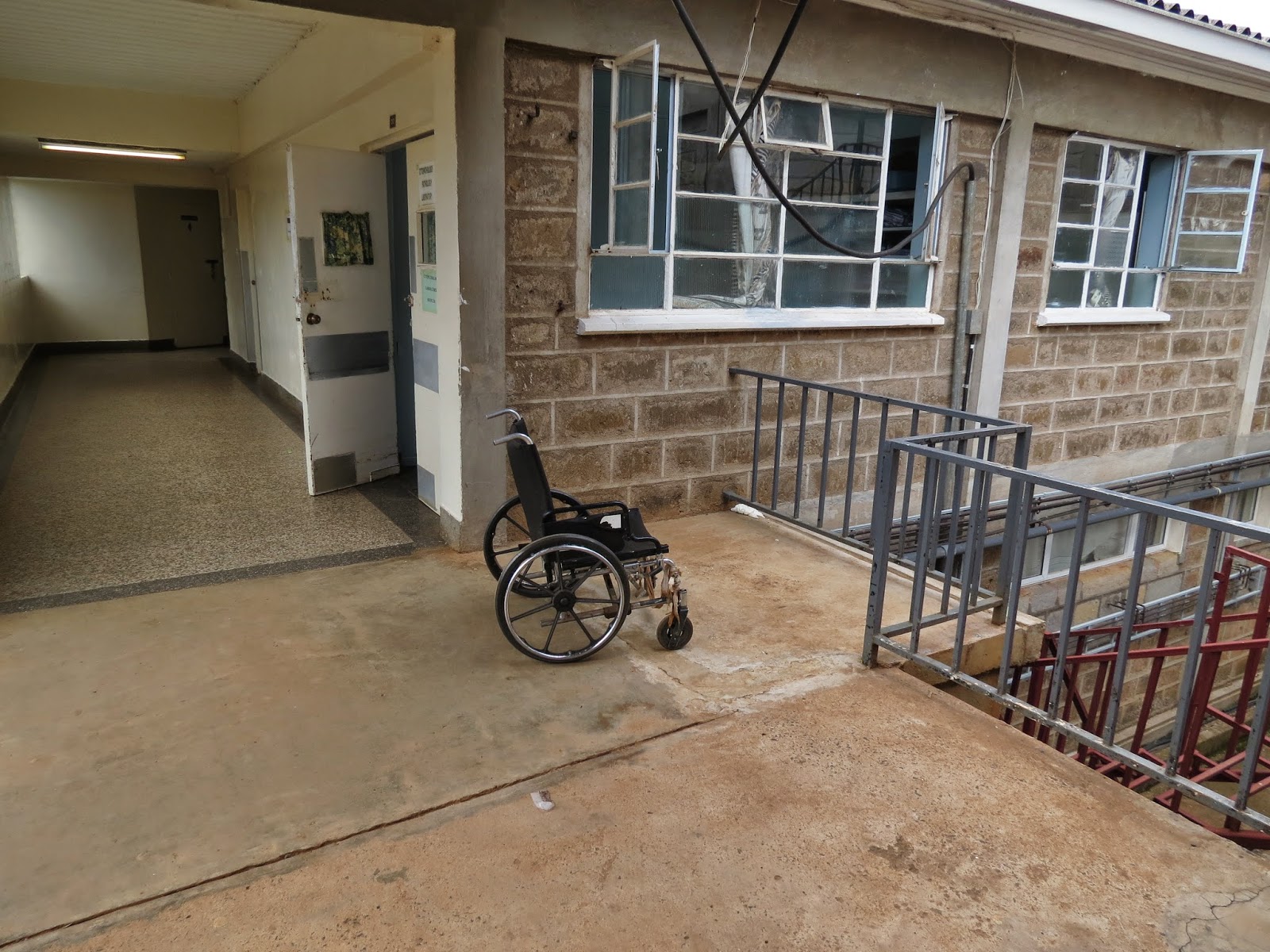
Sit with me in my clinic. It is Wednesday afternoon. Everyone, including the patients and their families, are tired. The queues are still long. The problems are many. My intern comes in with a wheelchair bound patient from the female surgical ward. She has brought her here to examine, because doing a pelvic exam in the wards is atrociously difficult (Where is a light? Where is an exam table? Where is a speculum?). So I look up, and there is the patient. She is a 38 year old lady who had a stroke a few months ago and really cannot communicate. She was admitted because she had gotten a blood clot in her leg and had to go on blood thinner so she would not get an embolus to her lungs. She had had polio as a child, and her left leg was limp and paralyzed. Add to this the stroke and being bedridden-and she was a set up for a DVT (deep venous thrombosis). So now she is on blood thinner-and she is bleeding out from her menstrual period every month. Enter me, the gynecology consultant.  I examine her in our busy clinic. It is hot. She cannot move well. She cannot speak. We lift her to the bed.

In my mind, I flash to Bethesda: to the man on his palate by the pool. There is no one to lift him into the water. Enter into his frustration, his pain, his helplessness: the dirt, the smell, and the chaos.

And then Jesus is there. And it is simple. “Pick up your bed and walk.” And he does.

I finish examining this woman: no cervical cancer, no fibroid uterus-just a debilitated woman on blood thinner. And there is little I can do for her. We carry her back to her wheelchair. My eyes fill up with tears. Nothing I can do. If Jesus had been here, he could have healed her-her legs, her clots, her stroke, her bleeding.

I write a note in her chart. We pray for her. She returns to the ward. I see the next patient.


Walk with me up this hill. It is early in the morning. I trudge up to the hospital wards. All of our corridors are outside. I walk past a bench with a woman seated upon it. We are outside of our ICU. Suddenly, as I pass, she lets out a long wail. She shakes her head again and again, and takes her outer skirt and covers her face. “What is wrong, Mama?” One of my interns comes alongside. It is silent except for the wailing. “Her son has just died in the ICU. The father is with him now.”

Her son was ten. He had had a headache for two days. Once he arrived here, he was treated for meningitis-but it was too late. He was brain dead.  The doctor had just removed him from the ventilator. The father is with him. The mother sits alone on a bench and wails.

In my mind, I flash to another small dusty village, two thousand years ago. I hear the wailing. The child is dead.

And then Jesus is there. And it is simple. “Arise little one.”  And she does.

I place my hand on the woman’s shoulder. Her grief is unbearable. We pray for her. She awaits her husband and the body. I walk on. I stumble through the haze.  I go down the hall and into Maternity to begin rounds.


Lord if you had been here . . .

Martha said it at the tomb of Lazarus. And Jesus wept. I think he wept for the fall of man. For all of this brokenness that was never supposed to be.
Which is easier to say:  ‘Your sins are forgiven?’ or ‘Get up and walk?’  But just so you know that the Son of Man has the power to forgive sins, I say to you ‘Pick up your bed and walk.’ (see Luke 5: 17-26)

I know that healing is real. I have seen it here, without medical explanation. But God did not choose to heal this woman or raise this child. And yet, we walk on, through the pain, through the Via Dolorosa of our lives and the lives of the people God has placed upon our path. And we KNOW, because the Son of God died in our stead, we can have forgiveness of sins. So that one day, ONE DAY: the lame will walk,  and the dead will rise.

Many years ago, when I was a little sprout, my mama took me to a Passover Seder, conducted by the Ministry of Jews for Jesus, in Richmond, Virginia. It was about seeing Christ in Passover. Part of the ceremony involves hiding a piece of Matzo bread somewhere in the house. The children of the family then go and try to find it. The bread represents Jesus in this ceremony. I was anxious, and surrounded by many children. And yet, I went to a place in the room where no one else was looking: and I pulled out the bread-it had stripes upon it from baking, and was covered in a white cloth. I found it! And I remember holding it up, and knowing that in finding it, I had been found. And that Jesus would always be with me, not because of something I had done, but because of his great love for me, because of the stripes he bore on his body.

And now, years later, in this hospital in rural Africa, as I struggle to comfort, to treat, to love, to bring the hope of healing to the sick, the frightened, the grieving, the dying:  I somehow know, in the midst on my own brokenness, that He is here. And by his stripes we are healed. ONE DAY. Come Lord Jesus.

Sunday, March 9, 2014

Betty


It is not how much you do but how much love you put into the doing and sharing with others that is important. Try not to judge people. If you judge others then you are not giving love.
Mother Teresa

Trust in the Lord with all your heart, and lean not on your own understanding.
Proverbs 3:5

When I first saw her in our Maternity ward, I believed her. My years of clinical experience told me not to believe her, but she was earnest in her story, and so I believed her anyway.  I believed her right up to the point when we opened her abdomen and found the results of a botched abortion in the form of a dead fetus and a lacerated, necrotic uterus.

I heard about the bad motorcycle accident over the weekend. Some poor family had been rushing to visit their sick relative at our hospital. As so often occurs here, multiple people piled onto the Piki-Piki. Helmets—are you kidding? This time, a two year old was on board with her parents and her grandmother, stacked up behind the driver. That’s a total of five souls over an engine with two wheels, speeding over dirt and rock roads. The parents were killed instantly. The grandmother sustained head injuries. The little girl had an open femur fracture and was now an orphan.

It wasn't until the next day that I learned the patient to whose side they were racing was my patient, the woman who had come in, lied about her history, and was finally taken to the OR where we had to perform a hysterectomy, followed by staged debridement and multiple washouts. Her history unfolded over a week: married with three children at home, she went out and attempted a late term abortion. Someone had perforated her uterus. She was becoming sick. She had gone to two different hospitals where she continued to deny that she had gotten an abortion—and so the days passed and she continued to worsen until she finally came into our hospital.

Postoperatively, she started to get worse. She became septic. She had seizures. She had to be intubated. Finally, her lungs and her kidneys failed. I sat with the family. Her husband was intoxicated on local brew. He had just sold off his farm in order to pay all the bills incurred by her hospital stays, and for the care of the mother-in-law, and the two year old child with a broken leg. He had other children at home asking for their mama. When was she coming home? The brothers and sisters, aunts and uncles sat by, trying to understand what had happened, what was happening, what could be done, and terms like “multi-system organ failure.”

I sat at the little nurses’ station and watched her family members surrounding her in the unit bed. They were saying goodbye. She died that night.

“Let’s go visit a patient,” Angela, my friend and visiting colleague, said to me. I really did not want to go. The death of this woman had shaken me. Watching her die had shaken me. Days later, I could not forget her last hours. I would never forget her or the tragic events that had unfolded around her story. Angela knew this. She came up to me in her sweet, matter-of-fact way: “Let’s go,” she said.

I found a precious little girl on the Pediatric Ward. She tucked her head and smiled when she saw
Angela approach—for my friend had been visiting her all along, bringing her sweets. A young woman was there with her, her auntie. She obviously loved the little girl. Angela gently pulled back her blanket: I saw her right leg was healing, from an open fracture sustained after being thrown from a Piki-Piki.

For those of you reading this story that follow Jesus, I can share this hope: our patient accepted Christ as her Savior before she died. The little girl with the broken leg is healing and physically will recover. Her aunt will raise her. I do not know if the mother-in-law will recover, or how our patient’s husband and children will cope. But I hold onto the promise that one day, Jesus will make all things new. And one day, all of this brokenness will be healed, and our faith will become sight.


Wednesday, February 26, 2014

Christmas reflections . . . in February


The following three vignettes were written throughout the recent holiday season. I share them now while taking a deep breath before the next plunge. My family and I are so grateful to be here in Africa. Thank you for your care, support and encouragement!

December Madness

December was a challenging month here at our Mission Hospital. While we were trying to get into the holiday spirit with Christmas trees (thank you prelit Home Depot tree that traveled well-second year in use and still going strong), twinkle lights, and a crèche made from a gourd, we encountered some difficulties up the hill. First and foremost, December is our July in Kenya. For all of you American docs out there, you know what this means: new interns. But this year we had some added stress: most of the doctors and nurses in Kenya went on strike. There were a few hospitals that remained open, and we were one of them. What this meant was that our patient volume and acuity sky rocketed. At one time on Maternity, we had over 130 patients registered. They came on foot. They came on piki-pikis. They came on matatus. And they just kept coming. There were women laboring in the halls, and often two or three women sharing a bed.  One morning I looked up and saw one of our nurse midwives, Evasha, standing in front of a woman he had just delivered. Another was about to deliver. He was covered in sweat, his hat and his mask were askew, more patients were coming in—they needed a place to deliver. All of the sudden, amidst the chaos, he stopped, threw back his head, and shouted: “His grace is sufficient! “

We stood in stunned silence, and then broke out cheering. Because--

--it was. Through all of the admissions, sick patients, normal and abnormal deliveries, emergency surgeries and late nights that turned into early mornings, His grace WAS sufficient—for us, and for these precious women whom we serve.

The Broken Ultrasound
In the thick of the strike, we lost all ultrasound capability. We are very dependent on our little ultrasound. We do not have continuous fetal monitoring, and we often do not have paper for the monitors that do work. Our one doppler was broken. Fetoscopes do work, but not to diagnose things like placenta previas or ectopic pregnancies. And yet His grace was sufficient in the midst of broken technology too. One of our visiting Obstetricians was on call the weekend the ultrasound went belly up. She had a patient who was bleeding, but the etiology was unclear. As she turned to look at the useless machine in the corner, a verse came to her: In all things, at all times, having everything that you need . . . (2 Corinthians 9:8).


In her own words: "It is a promise: I have everything I need tonight."

She got the ultrasound probe out and tried to turn on the machine—it flickered on, and she was able to see that the patient had a placenta previa. The machine then went off: AND IT NEVER FUNCTIONED AGAIN.

And the promise given to her covered us for the weeks we did not have ultrasound capability. Unbeknownst to us, an Obstetrician from America had felt that he should raise money for an ultrasound for Tenwek OB.  Now ultrasounds are extremely expensive, but when the call went out that our service was without an ultrasound, he was ready to purchase it, and with the help of folks from across the U.S. and here in Kenya, it is being brought out to us this month.

A Christmas Carol

Christmas caroling will never again be the same for me…

She was an HIV positive mom with a history of two previous cesarean scars who came in in labor. She went for cesarean in the morning, and the docs who performed the surgery reported that all had gone well.  My senior Medical Officer came to me after the patient went to recovery—he had been called because she was slightly hypotensive in the recovery room. Her urine output was still good, and she had responded to a fluid bolus. Her exam was initially normal, but she did not maintain her BP—and it dropped again despite fluid. We rushed her to theatre—and it took everyone, from anesthesia, to our nurses in recovery, to our staff in Maternity to get her to the table. She was becoming unstable rapidly. I opened her incision, expecting a huge gush of blood. Dry—no blood in the abdomen. What I did find was the BIGGEST HEMATOMA I HAVE EVER SEEN dissecting back into the retroperitoneum. The word from our lab came: NO blood. She was crashing. I asked my general surgical colleague to scrub in and we started to perform a hysterectomy. Still no blood. We thought she was going into something called DIC—where the patient is so overwhelmed by blood loss that their ability to clot is lost—and if not turned around rapidly, they bleed to death. At that moment, while we were working, we were praying, and sent the word out: we need A negative blood. My surgical colleague is A negative. He left the table and came back in with his own blood in a bag. Unit number one went in while he rescrubbed. Then something amazing happened: the word had gone throughout the missionary staff about our patient. Now it was evening, and the other missionaries were assembling for our annual caroling at the hospital. Before they caroled, all of our A negative folks donated blood. 30 minutes later, our patient had stabilized. As I took a deep breath, I looked up and saw a normal BP flashing on the anesthesia monitor. Freshly donated blood was being transfused.

 And just then, I heard them. Christmas carols were being sung throughout Maternity, by the very ones who had given their own blood so our patient could live.

Silent Night, Holy Night, All is calm, all is bright . . .

Strikes, broken equipment, a patient very near death. His grace was and still is sufficient. His strength is made perfect in our weakness. He provides what we need. A different kind of Christmas? Yes. But one I shall never forget.

Saturday, August 24, 2013

Things handed down


It was a difficult night. A 20 year old had come in as a referral from an outside hospital with the following story: Several years ago she had had a cesarean section, and was now pregnant at approximately 22-24 weeks. She had gone to an outlying hospital where they diagnosed an intrauterine fetal demise, and started an induction. A week later, she still hadn’t delivered and was septic. By the time we saw her, she had "the look." ("The look" is how I have come to describe the appearance of a woman who is close to death and knows it. It is in her eyes. It is a brave look. And it is also a look of resignation and sadness. There are never any tears, and there is always a profound silence). Her abdomen was soft and she had some guarding, and the fundus of her uterus was not readily palpable. The ultrasound showed a fetus—but not clearly in a uterus. I took her to theatre and found her 24 week baby outside her uterus, and a placenta that was attached by adhesions to her small bowel. Her uterus had ruptured days before and was not viable. And so, at 10 o’clock at night, I found myself doing a hysterectomy on a 20 year old.

The next morning, I received a call from my intern. We had gotten another transfer—this time from a very remote area, with this story: She is a 32 year old mama with four children. She had delivered all of her other babies at home—but this last delivery did not go well. She labored for days, finally made it into a district hospital, and was diagnosed with obstructed labor and a fetal demise. She underwent a cesarean section. At the time of her operation the doctor thought her bladder was necrotic. They sent her home on post op day #3. She returned several days later with hemorrhage and purulent vaginal drainage, along with urinary incontinence. She got antibiotics, and a week later was transferred to us septic with a hemoglobin of 4. When I went to her bedside, she too had "the look." She was hypotensive, tachycardic, febrile, and breathing 40 times a minute. Her wound was pouring out huge amounts of foul drainage, and she was bleeding. Her exam was consistent with a dead uterus sitting in her abdomen, and also for possible early necrotizing fasciitis.

And so, a hard night devolved into a harder morning. An hour later, I was in the theatre—and this case was much, much worse, because the patient’s uterus and upper vagina, along with some fascia and muscle, were necrotic and gangrenous. The smell was horrific. After two hours, we had gotten her uterus out, her vagina resected, and her pelvis debrided.

Both of these women survived surgery. They both have a long way to go towards recovery.

This afternoon I am sitting beside an open door, listening to crows calling, looking out towards the Poinsettia and Jacaranda trees full of bright little birds, feeling the soft breeze blowing through my curtains and onto my skin—I am tired and I am thinking about my patients. I know about the anatomy, the surgery, the physiology. I know how to approach their care—in the operating room and postoperatively. I know they are both not out of the woods by any means —the human body is just not meant to undergo this type of prolonged insult. But I also know that they can survive, they now have a chance. So, I know a lot of things—but I have realized out here that it is not enough just to know a lot of things.

I grew up the daughter of a physician who was a general practitioner turned child psychiatrist. My childhood and early adult years were spent beside him, soaking up everything he could teach me about being a physician—but more than that, a physician who practices out of a call to help and minister to the body, soul and spirit of a person created in the image of God. Many times I find myself thinking, feeling and sensing with my patients, the way my father did, and sometimes the feelings can be so strong I have to step away.

Yesterday, standing beside that second patient who had suffered so much and had come from such a remote place—I became momentarily overwhelmed by her pain. But I could not step away. I was the Gynecologist who had to open her abdomen and try to begin to fix what was terribly broken. She needed a Gyn surgeon at that moment—but she also needed something more. She needed someone to see beyond her broken body, beyond the anatomy, the surgery, the physiology. She was alone, quite possibly facing her final moments of consciousness this side of eternity. No one spoke her tribal language. Her family was not around. Strange people in masks were standing over her. The lights were very bright.
It was at that moment I saw "the look" come into her eyes. But wasn’t I the surgeon? Could I feel with this woman and do the things I needed to do to save her life? At that critical time, it had to be about the anatomy, the surgery, and the physiology, didn’t it? Could I let myself become vulnerable, right before I started hacking away the gangrenous tissue filling her pelvis and abdomen?

She was looking at me then. I grabbed her hand and we stared into one another’s eyes. I tried to tell her without words that she was not alone. She held my hand tightly and I looked down to see our hands grasping one another: one hand freckled, pale fingers entangled with her beautiful, dark and work- worn fingers. In the next few minutes we induced anesthesia and began surgery.

As a missionary doctor in Africa, I confront many challenges —the surgery is difficult, the diagnoses can be illusive, and the suffering of my patients often extreme. The emotional and physical toll is great. Yet in the midst of this, I am rediscovering what it means to be the kind of physician that my father was. Yes it is about medical knowledge, technical proficiency, and experience. Yes, it is about empathy, even personal vulnerability. But it turns out that the whole is far greater than the sum of the parts. And knowing a lot of things does not make you a good physician—although it might make you a good technician. There is a sacredness about what the physician does: ministering to a hurting, perhaps profoundly damaged person, created in the image of God. And it calls for something that cannot be outcome measured in electronic health records, or counted off in shift hours or time cards. It cannot be defined in terms of patient safety acronyms, or equated with teams of administrators administrating. It is what my father knew after nearly a half century of the practice of medicine.

And it is what I am coming to know, and perhaps beginning to understand, in the middle these difficult nights, in this hard place, holding onto the hand of my patient.